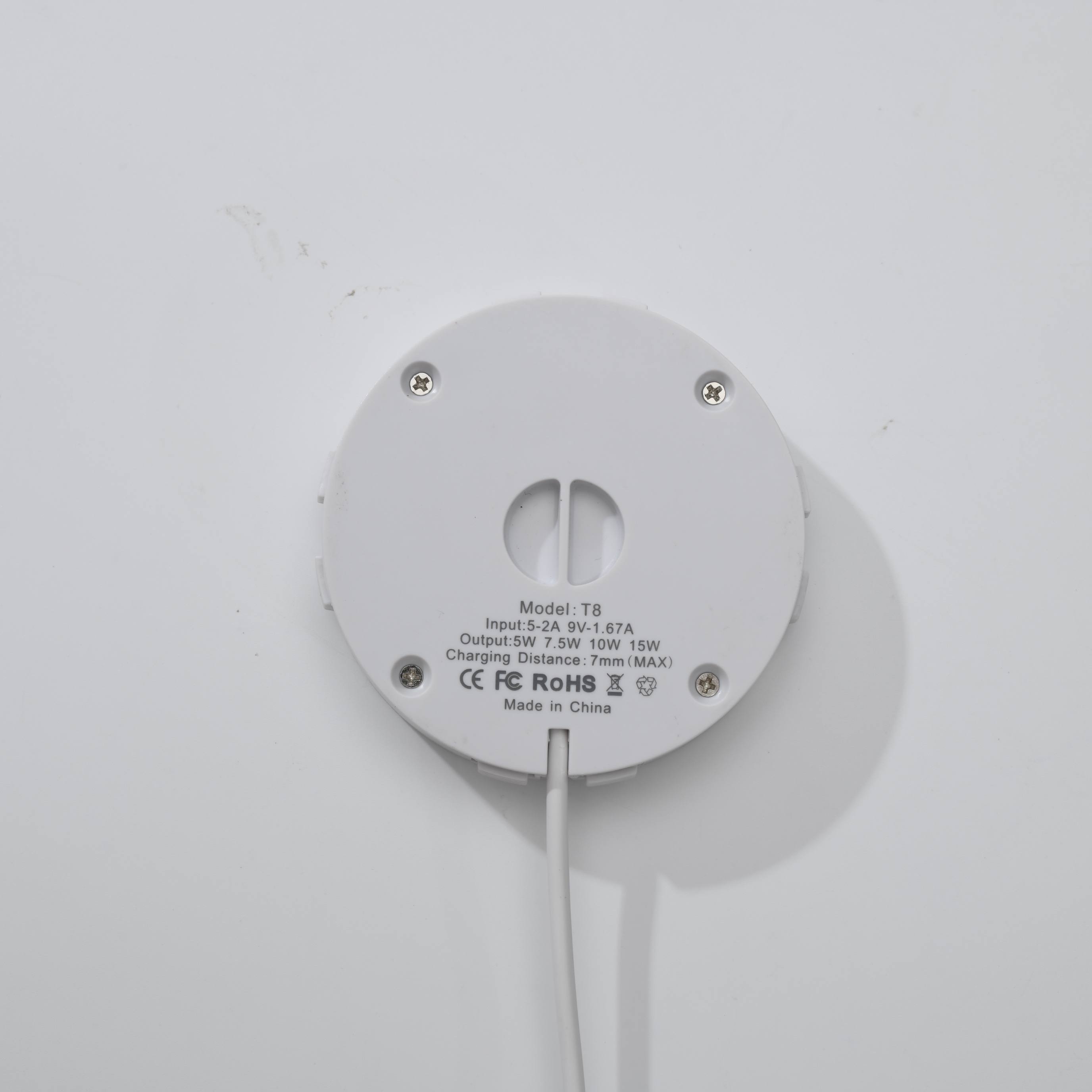


The Embedded Isolated Wireless Charger is a contactless wireless power supply device designed for applications that require electrical isolation, safe power transmission, and integrated installation. Based on electromagnetic induction technology, this embedded wireless charging system transfers energy from a transmitter to a receiver through magnetic coupling without requiring a direct electrical connection.
With an isolated power transmission structure, the embedded isolated wireless Charger helps reduce the risks associated with exposed electrical contacts, current leakage, and electrical interference. Its compact modular design allows integration into desktops, equipment housings, industrial control systems, medical equipment, and other electronic devices.
Supporting wireless power transmission, embedded installation, and customizable communication functions, this isolated wireless charging solution is suitable for industrial automation, smart furniture, medical equipment, and other applications requiring reliable contactless power supply.
As a professional wireless charger manufacturer and supplier, we provide embedded wireless charging modules and customized wireless power solutions for different equipment and industrial applications.
The embedded isolated wireless charger uses an electrical isolation structure between the transmitter and receiver. Energy is transferred through a magnetic field or electric field without a direct conductive connection.
Key technical parameters:
Isolation voltage: ≥ 2.5kV RMS
Air gap distance: ≥ 3mm
Leakage current: < 10μA
This isolated wireless power transfer design helps reduce the risks of short circuits, electrical leakage, and high-voltage interference. It is suitable for equipment operating in humid, dusty, or electrically complex environments.
Designed for integrated applications, the wireless charging module can be embedded into desktops, equipment housings, cabinets, and other suitable structures. Its modular packaging design eliminates the need for exposed charging interfaces.
Typical module dimensions:
Φ70mm × 12mm
80mm × 15mm
Customized dimensions available
Installation methods include embedded fixing, rear magnetic mounting, and PCB bonding or soldering.
The embedded design helps improve equipment integration, appearance, and protection against interface wear, contamination, and accidental disconnection.
Using electromagnetic induction and adaptive frequency modulation technology, the embedded wireless power supply transfers energy through a contactless coupling system.
Key technical parameters:
Operating frequency: 110kHz–205kHz
Transmission power: 5W / 10W / 15W
Customized power: Up to 30W+
Maximum transmission distance: ≥ 6mm
System conversion efficiency: ≥ 76% under 15W load conditions
Charging protocol: Qi standard and customized industrial protocols
The contactless power transmission design eliminates the need for metal charging contacts or physical plugs, helping reduce connector wear and maintenance requirements.
To improve operating safety and reliability, the embedded isolated wireless charger supports multiple protection and monitoring functions.
Protection features include:
FOD (Foreign Object Detection)
Overvoltage protection
Overcurrent protection
Overtemperature monitoring and protection
Short circuit protection
Key parameters:
FOD response time: < 400ms
Overtemperature protection point: 65°C ± 5°C
EMC interference level: Meets CISPR 32 Class B requirements
These functions help identify abnormal operating conditions and protect the wireless power transmission system during operation.
For advanced applications, the embedded wireless charging module can integrate communication interfaces to support system monitoring and intelligent control.
Optional communication methods include:
UART
CAN
I²C
Bluetooth BLE
Communication parameters:
I²C communication rate: Up to 400kbps
UART communication rate: 9600bps
Depending on the system configuration, communication functions can support device identification, power feedback, and authentication verification. This makes the module suitable for smart equipment requiring wireless power supply and information interaction.
| Parameter | Specification |
|---|---|
| Product Type | Embedded Isolated Wireless Charger |
| Power Transmission Principle | Electromagnetic Induction |
| Isolation Voltage | ≥ 2.5kV RMS |
| Air Gap Distance | ≥ 3mm |
| Leakage Current | < 10μA |
| Module Dimensions | Φ70mm × 12mm / 80mm × 15mm |
| Installation Method | Embedded Fixing / Rear Magnetic Mounting / PCB Bonding or Soldering |
| Operating Frequency | 110kHz–205kHz |
| Transmission Power | 5W / 10W / 15W |
| Customized Power | Up to 30W+ |
| Maximum Transmission Distance | ≥ 6mm |
| Conversion Efficiency | ≥ 76% under 15W load conditions |
| Charging Protocol | Qi / Customized Industrial Protocol |
| FOD Response Time | < 400ms |
| Overtemperature Protection | 65°C ± 5°C |
| EMC Requirement | CISPR 32 Class B |
| Communication Interfaces | UART / CAN / I²C / Bluetooth BLE |
| Customization | Available |
Specifications may vary depending on the module configuration and customization requirements.
The embedded isolated wireless charging module is designed for electronic equipment and environments where contactless power transmission, electrical isolation, and integrated installation are important.
In medical environments, embedded isolated wireless power supply technology can help reduce exposed electrical contacts and avoid contamination associated with conventional plug-in interfaces.
Potential applications include:
Surgical light control modules
Medical cameras
Diagnostic instruments
Embedded medical equipment
For medical applications, the final product must be evaluated against the applicable medical electrical safety and regulatory requirements. The module specifications alone do not establish medical-device certification.
Industrial automation equipment often operates in environments with dust, oil, vibration, and complex electrical conditions. Contactless power transmission can reduce cable entanglement and connector wear.
Typical applications include:
Industrial robot arms
AGV (Automated Guided Vehicle) systems
Wireless sensor terminals
Industrial monitoring equipment
Automated control systems
The embedded wireless power supply design helps support equipment integration and reduce maintenance associated with physical power connectors.
The embedded isolated wireless charger can be integrated into furniture to provide convenient contactless charging while maintaining a clean and organized appearance.
Typical applications include:
Conference tables
Office desks
Bedside tables
Smart furniture
Embedded charging terminals
It can transfer power through suitable non-metallic materials such as wood, plastic, and glass, subject to the module's installation and coupling requirements.
In marine equipment, yachts, and outdoor installations, exposed electrical connectors may be affected by moisture and salt spray.
Embedded contactless wireless charging can reduce reliance on exposed charging contacts. It may be integrated into appropriately designed sealed equipment housings.
For applications requiring IP67 or IP68 protection, the complete enclosure and system design must be tested and rated accordingly. The wireless charging module itself does not automatically provide these protection ratings.
Electrical isolation and contactless power transmission can be useful in monitoring systems and equipment operating near electrically complex or high-voltage environments.
Potential applications include:
Battery pack monitoring modules
Track sensor systems
Rail transit monitoring equipment
Industrial energy monitoring terminals
The isolated wireless power supply structure helps reduce the need for direct electrical connections between the transmitter and receiver.
Compared with conventional wired power connections, an embedded isolated wireless charging system offers several advantages for suitable applications.
| Feature | Embedded Isolated Wireless Charger | Conventional Wired Power Supply |
|---|---|---|
| Power Transmission | Contactless magnetic coupling | Physical electrical connection |
| Electrical Isolation | Designed with isolated transmitter and receiver | Depends on power supply architecture |
| Physical Connectors | No direct charging contacts required | Requires cables, plugs, or connectors |
| Interface Wear | Reduces connector wear | Connectors may wear through repeated use |
| Installation | Suitable for embedded integration | Requires physical wiring and interfaces |
| Maintenance | Can reduce connector-related maintenance | May require connector inspection and replacement |
The main advantage of isolated wireless power transmission is its ability to deliver power without a direct conductive connection, making it useful for applications where electrical isolation and integrated installation are important.
Although the embedded isolated wireless charger uses a contactless structure, regular inspection helps maintain stable operation and charging performance.
Dust, oil, and other contaminants on the charging panel may affect wireless power transmission. Clean the surface regularly using a soft, lint-free cloth. Follow the cleaning instructions for the complete equipment and its enclosure.
Check the operating temperature during continuous use. If the temperature approaches or exceeds the specified protection threshold of 65°C ± 5°C, inspect the installation environment, heat dissipation conditions, and power load.
Periodically verify that the Foreign Object Detection function responds correctly according to the manufacturer's testing procedure. Abnormal detection or charging interruption should be investigated before continued operation.
Check whether the embedded module is securely fixed. Loose mounting, displacement, or housing damage may affect alignment and wireless power transmission efficiency.
Use a regulated DC power supply that matches the module's specified input requirements. The recommended input configurations provided for this product are 9V/2A or 12V/1.5A. Confirm the exact input specification for the selected model before connection.
Selecting the right wireless power supply manufacturer is important for equipment compatibility, electrical safety, and long-term product development.
Our embedded isolated wireless charging solutions are designed for customers requiring integrated, contactless, and electrically isolated power transmission.
Electrical Isolation Design: Supports isolated wireless power transmission with a specified isolation voltage of ≥ 2.5kV RMS.
Flexible Power Configurations: Supports 5W, 10W, and 15W standard power levels, with customized solutions up to 30W+.
Embedded Integration: Compact module structures are suitable for installation in furniture, equipment housings, and industrial terminals.
Multiple Communication Options: UART, CAN, I²C, and Bluetooth BLE can be integrated for selected applications.
Customized Solutions: Module dimensions, power configurations, and communication functions can be discussed according to project requirements.
Contact us to discuss your embedded isolated wireless charger requirements and find a suitable wireless power supply solution for your equipment.
An embedded isolated wireless charger is a wireless power supply device that transfers energy from a transmitter to a receiver through electromagnetic coupling without a direct electrical connection. Its embedded structure allows installation inside furniture, equipment housings, and industrial systems.
Electrical isolation separates the transmitter and receiver electrically while allowing energy to transfer through electromagnetic coupling. It helps reduce the risk of direct electrical contact, leakage paths, and unwanted electrical interference.
The standard transmission power configurations are 5W, 10W, and 15W. Customized power solutions up to 30W+ are also supported, depending on the product configuration.
Yes. The module is designed for contactless power transmission through suitable non-metallic materials, including plastic, wood, and glass. The actual transmission distance and efficiency depend on material thickness, coil alignment, and system configuration.
The product specification indicates support for the Qi standard and customized industrial protocols. Actual device compatibility depends on the selected transmitter and receiver configuration.
Optional communication interfaces include UART, CAN, I²C, and Bluetooth BLE. These can support functions such as device identification, power feedback, and authentication verification, depending on the selected model.
It can be considered for selected medical equipment applications that require contactless power transmission. However, the complete medical device must meet the applicable medical electrical safety, EMC, and regulatory requirements. Suitability should be confirmed through system-level evaluation.

Mainly designs, produces and sells power adapters, chargers, power sockets, household appliances, and peripheral products


Copyright © 2026 Shenzhen Hongji Xingyuan Electronics Co.LTD All rights reserved.