


Power Adapters are used in almost every type of electronic equipment, from consumer electronics and office devices to industrial equipment and automotive accessories. But how do Power Adapters work, and how can they safely convert electricity from a wall outlet into the power required by an electronic device?
In simple terms, a power adapter converts electrical energy from a power source into a suitable voltage, current, and power format for a specific device. Most modern adapters convert high-voltage AC input into regulated low-voltage DC output.
Understanding the basic working principle of a power adapter can help buyers choose the right adapter for their equipment and help OEM customers determine the appropriate power solution for their products.
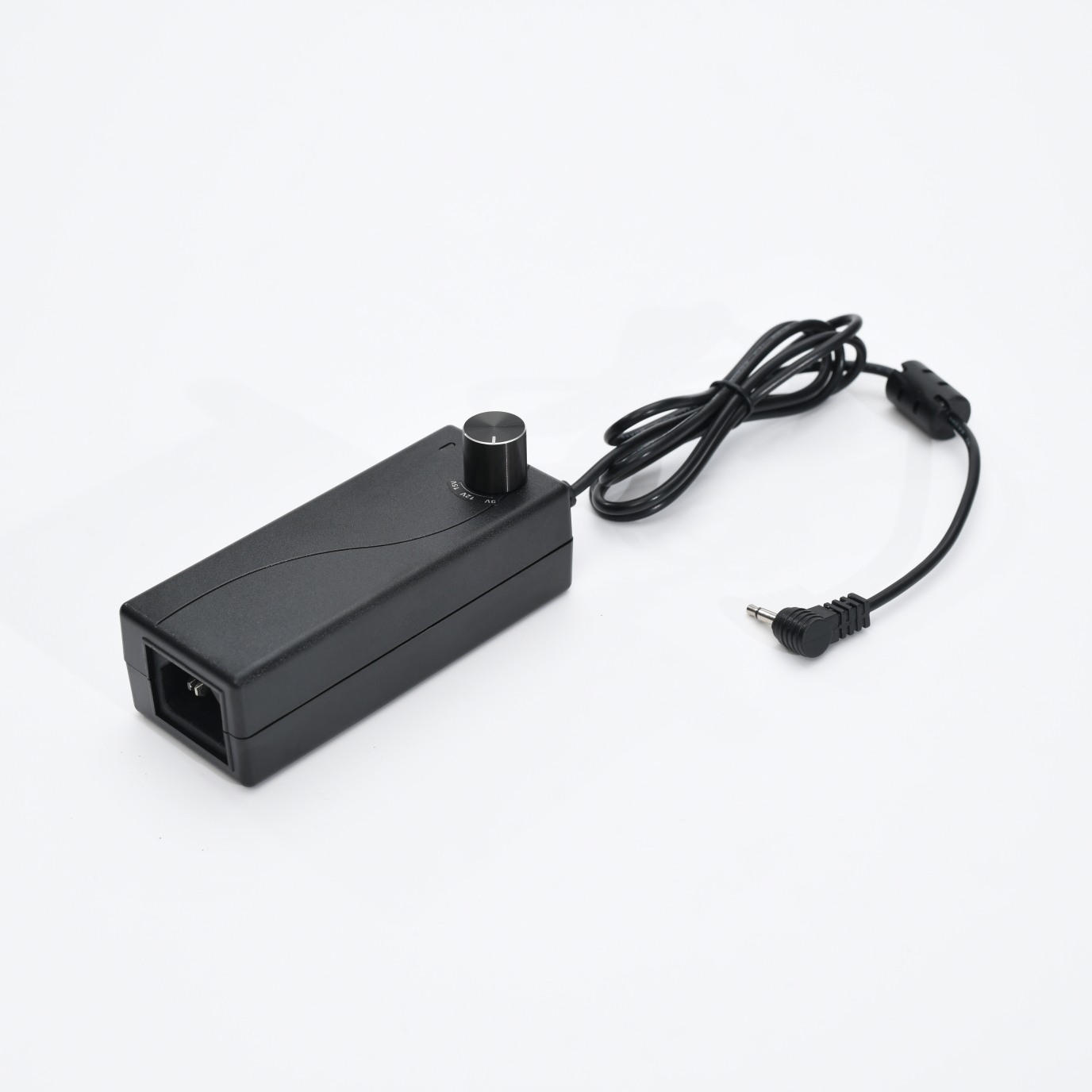
What Is a Power Adapter?
A power adapter is an electronic device that converts electrical power from one form to another. A typical adapter receives AC power from a wall outlet and provides a controlled DC output for an electronic device.
For example:
AC Input → Power Conversion → Regulated DC Output → Electronic Device
A typical adapter may accept an input such as 100–240V AC and provide an output such as 5V, 9V, 12V, 24V, or another specified DC voltage.
The exact input and output specifications depend on the application.
Common applications include:
Consumer electronics
Networking equipment
LED lighting
Industrial control systems
Office equipment
Automotive electronics
Smart Home devices
Security equipment
Medical and specialized electronics
How Do Power Adapters Work?
So, how do power adapters work internally?
Although different designs may use different circuits, a modern switching power adapter generally follows several main stages.
1. AC Power Input
The process starts when the adapter is connected to an AC power source.
Depending on the product design and target market, the input may support a wide voltage range such as 100–240V AC, 50/60Hz. Wide-input designs are particularly useful for products intended for international markets.
At this stage, safety components can help protect the adapter from abnormal input conditions.
2. Rectification
The incoming AC power is then converted into DC through a rectification circuit.
A rectifier, usually based on diodes or other semiconductor components, converts the alternating voltage into a pulsating DC voltage.
A filtering circuit then smooths the rectified voltage so that it can be processed by the switching circuit.
3. High-Frequency Switching
This is an important part of a switching power adapter.
A switching controller and power semiconductor rapidly turn the electrical current on and off at a high frequency. Instead of continuously reducing voltage like a traditional linear power supply, the switching circuit transfers energy in controlled pulses.
High-frequency operation allows the transformer and other components to be much smaller than those used in many traditional low-frequency power supplies.
This is one reason modern switching adapters can achieve a compact size and high efficiency.
4. Voltage Transformation and Isolation
The high-frequency electrical energy is transferred through a transformer.
The transformer can:
Reduce or increase voltage
Provide electrical isolation
Transfer energy efficiently between the primary and secondary sides
For many AC-to-DC adapters, isolation between the input and output sides is an important safety feature.
5. Secondary-Side Rectification
After the voltage is transferred through the transformer, the output is rectified again.
The high-frequency waveform is converted into a DC output suitable for the electronic device.
Depending on the design, different rectification technologies and components may be used to improve efficiency and reduce power losses.
6. Filtering and Voltage Regulation
The DC output then passes through filtering and regulation circuits.
Capacitors, inductors, feedback circuits, and control components work together to produce a stable output.
For example, if an adapter is designed to provide 12V DC, the control circuit continuously monitors the output and adjusts the switching process when necessary.
This feedback system helps maintain the specified output voltage when the input voltage or load changes.
What Is a Switching Power Adapter?
A switching power adapter uses high-frequency switching technology to convert electrical power efficiently.
Compared with traditional linear power supplies, switching designs can offer several advantages:
Higher efficiency
Smaller size
Lower weight
Wider input voltage range
Better power density
Lower energy loss
For these reasons, switching power supplies have become common in modern electronic products.
A well-designed switching adapter also needs appropriate thermal management, electromagnetic compatibility, and protection circuits to ensure stable operation.
AC Adapter vs. DC Adapter
The terms AC adapter and DC adapter are commonly used in the power supply industry, but they describe different aspects of the power conversion process.
An AC adapter generally refers to an adapter that receives AC power from an electrical outlet. Many AC adapters convert this input into regulated DC output.
A DC adapter, depending on the context, may refer to an adapter or converter that processes DC input and provides a different DC output.
For example:
AC → DC:
100–240V AC input → 12V DC output
DC → DC:
24V DC input → 12V DC output
DC-DC converters are widely used in automotive electronics, industrial equipment, communication systems, and portable devices.
What Components Are Inside a Power Adapter?
A power adapter contains multiple electronic components that work together to convert and regulate electrical energy.
Typical components may include:
Input fuse
EMI filter
Rectifier
Switching controller
Power MOSFET
Transformer
Rectifier components
Capacitors
Inductors
Feedback circuit
Voltage regulation circuit
Protection components
The exact circuit depends on the adapter's output power, voltage, efficiency requirements, size, safety standards, and intended application.
What Safety Protections Do Power Adapters Have?
A reliable power adapter should not only provide the required output but also protect the adapter and connected equipment from abnormal conditions.
Common protection functions include:
Over-Voltage Protection
Over-voltage protection helps prevent the output voltage from exceeding the specified range.
Over-Current Protection
If the connected device draws excessive current, the adapter can limit or shut down its output to reduce the risk of damage.
Short-Circuit Protection
A short circuit can cause a sudden increase in current. Short-circuit protection helps protect the power supply and connected equipment.
Over-Temperature Protection
If internal temperatures become too high, thermal protection can reduce or stop operation until the temperature returns to a safe range.
These protection functions are especially important for adapters used in continuous-duty industrial or commercial applications.
How Efficient Is a Power Adapter?
Power adapter efficiency describes how much of the input electrical power is converted into useful output power.
It can be expressed as:
Efficiency = Output Power ÷ Input Power × 100%
For example, if an adapter receives 100W of input power and provides 90W of useful output power, its efficiency is 90%.
The remaining energy is mainly lost as heat and other losses within the circuit.
Higher efficiency can help:
Reduce energy consumption
Lower heat generation
Improve product reliability
Reduce thermal management requirements
Support more compact designs
For this reason, efficiency is an important consideration when developing or purchasing a power adapter.
How to Choose the Right Power Adapter?
The output specifications must match the requirements of the equipment.
Important factors include:
Output Voltage
The output voltage must be compatible with the electronic device.
For example, a device designed for 12V DC should not be connected to an unsuitable voltage output.
Output Current
The adapter should be capable of supplying the current required by the device.
An adapter rated for a higher maximum output current can often support a device that requires less current, provided the voltage and other specifications are compatible.
Output Power
Output power is generally calculated as:
Power = Voltage × Current
For example:
12V × 2A = 24W
Therefore, a 12V 2A adapter has a nominal output power of 24W.
Connector
The connector must match the equipment in terms of dimensions, polarity, and electrical specifications.
Input Voltage
For products sold internationally, a wide input range such as 100–240V AC can simplify global deployment.
Why Work With a Power Adapter Manufacturer?
For companies developing electronic products, buying a standard adapter is not always the best solution.
A professional power adapter manufacturer can develop products according to specific electrical and mechanical requirements.
OEM customers may need customization in areas such as:
Input and output specifications
Output power
DC connector
Cable length
Plug type
Enclosure design
Protection functions
Labeling
Packaging
Electrical safety requirements
Working directly with a factory can also make it easier to discuss technical requirements, prototypes, testing, and mass production.
Choosing a Reliable Power Adapter Supplier
A reliable power adapter supplier should provide more than a product catalog. Buyers should consider the supplier's manufacturing capabilities, quality control system, testing procedures, and ability to support customized requirements.
Important questions include:
Does the supplier manufacture the adapters directly?
Can the factory provide OEM or ODM services?
What input and output specifications are available?
What protection functions are supported?
What safety and EMC requirements can be met?
Can samples be provided for testing?
Can the supplier support stable mass production?
For B2B buyers, these factors can be just as important as the unit price.
OEM and Custom Power Adapter Solutions
Different electronic products have different power requirements. An OEM power adapter can be developed according to the specifications of the customer's equipment rather than relying entirely on a standard model.
A custom power adapter may be designed for specific requirements involving output voltage, power rating, connector type, enclosure dimensions, cable configuration, or other electrical and mechanical parameters.
This approach is particularly useful for:
Consumer electronics brands
Industrial equipment manufacturers
Smart device companies
Security system manufacturers
LED equipment manufacturers
Automotive electronics companies
IoT product developers
The development process normally involves requirement confirmation, electrical design, prototype production, testing, sample approval, and mass production.
FAQ About Power Adapters
Do all power adapters convert AC to DC?
No. Many common adapters convert AC to DC, but DC-DC adapters and converters can also convert one DC voltage to another.
What does a 12V power adapter do?
A 12V power adapter provides a regulated output of approximately 12V DC when designed for that specification. It can be used to power electronic equipment that requires compatible 12V input.
Why do power adapters get warm?
Some electrical energy is inevitably converted into heat during power conversion. A well-designed adapter should control heat within its specified operating range through efficient circuit design and appropriate thermal management.
What is the difference between a power adapter and a power supply?
The terms are sometimes used interchangeably. Generally, a power adapter is an external power supply designed to provide power to a separate electronic device, while "power supply" is a broader term that can include internal and external power conversion systems.
Can a power adapter be customized?
Yes. Professional manufacturers can provide OEM and custom solutions based on voltage, current, power, connector, cable, enclosure, protection, and other requirements.
So, how do power adapters work? A modern power adapter typically takes electrical energy from an AC or DC source, converts it through rectification and high-frequency switching, transfers and regulates the energy, and finally provides a stable output suitable for the connected device.
For B2B applications, the right power adapter is not simply a matter of choosing the correct voltage. Efficiency, output current, protection functions, connector configuration, safety requirements, and long-term reliability all need to be considered.
By working with an experienced power adapter manufacturer and supplier, businesses can obtain both standard and customized power solutions for different electronic products and applications.