




AC to DC converters are essential components in modern electronics, providing the DC power required by devices that operate on direct current. From routers and Smart Home products to LED lighting and industrial control equipment, many electronic devices rely on an AC to DC converter to transform electricity from a standard AC power source into a suitable DC output.
How do AC to DC converters work? The process typically involves rectification, filtering, voltage conversion, and voltage regulation. Understanding these stages helps businesses select the right AC-DC Power Adapter or power supply for their equipment.
What Is an AC to DC Converter?
An AC to DC converter is an electronic device or circuit that converts alternating current (AC) into direct current (DC). AC electricity periodically changes direction, while DC electricity flows primarily in one direction.
Many electronic devices require a stable DC voltage to operate correctly. An AC to DC converter transforms the incoming AC power into a DC output that matches the equipment's electrical requirements.
Common AC-DC conversion products include:
AC-DC Power Adapters: External power supplies used for routers, consumer electronics, smart home devices, and other electronic equipment.
Switching power supplies: Power conversion units designed to provide regulated DC output through high-frequency switching technology.
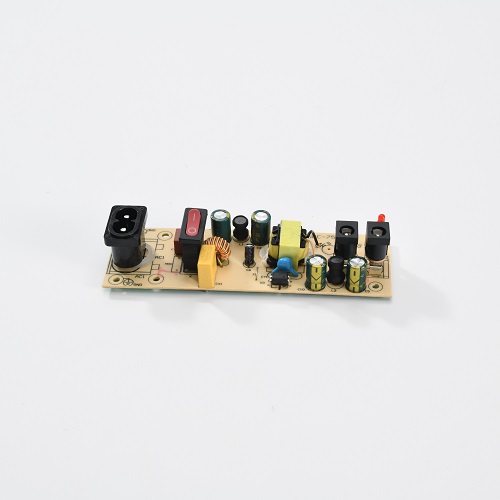
AC-DC power boards: Internal power supply circuits integrated into electronic products and control systems.
The appropriate converter depends on the required output voltage, current, power rating, efficiency, and application environment.
How Do AC to DC Converters Work?
The working principle of an AC to DC converter generally involves several stages. The exact circuit design varies depending on whether the power supply uses switching technology, linear regulation, or another conversion method.
1. Rectification: Converting AC into Pulsating DC
The first stage is rectification. A rectifier circuit, commonly built with diodes or a bridge rectifier, converts the incoming alternating current into pulsating direct current.
At this stage, the current flows in one direction, but the output voltage still contains significant fluctuations. Therefore, additional filtering and regulation are usually necessary before the power can be supplied to sensitive electronic devices.
2. Filtering: Smoothing the DC Output
After rectification, filtering components help reduce voltage fluctuations. Capacitors are commonly used to smooth the pulsating DC voltage and create a more consistent electrical supply for the following stages.
The effectiveness of the filtering circuit affects output ripple and overall power quality. Proper filtering is particularly important for electronic equipment that requires stable operating conditions.
3. Voltage Conversion: Adjusting the Voltage Level
The next stage depends on the converter's design.
In a typical switching power supply, high-frequency switching components work with inductors or transformers to transfer energy and adjust the voltage level. A transformer can also provide electrical isolation when the circuit is designed for isolated conversion.
Some AC-DC power supplies use a different approach, such as a linear power supply, which regulates voltage through linear electronic components rather than high-frequency switching.
The selected conversion method influences efficiency, size, heat generation, and the overall design of the power supply.
4. Voltage Regulation: Maintaining a Stable DC Output
Voltage regulation helps maintain the required DC output under specified input and load conditions. In many switching power supplies, a feedback circuit monitors the output and adjusts the switching operation to compensate for changes in load or input voltage.
For example, an electronic device designed for a 12V DC supply needs a power adapter that provides the appropriate output voltage within its specified operating limits.
A properly designed AC DC power adapter helps deliver consistent power while supporting the safe and reliable operation of compatible equipment.
What Are the Main Components of an AC-DC Converter?
The internal components of an AC to DC converter vary according to its topology, power rating, and application. Common components include the following:
| Component | Main Function |
|---|---|
| Rectifier or bridge rectifier | Converts AC into pulsating DC |
| Filter capacitors | Reduce voltage fluctuations after rectification |
| Switching controller | Controls high-frequency switching in switching power supplies |
| MOSFET or other switching devices | Control energy transfer during switching operation |
| Transformer or inductor | Supports voltage conversion and energy transfer, depending on the circuit |
| Feedback and regulation circuit | Helps maintain the specified output voltage |
| Protection circuit | Helps protect against conditions such as overcurrent, overvoltage, or short circuits, depending on the design |
Not every AC-DC converter contains all these components. For example, a linear power supply does not use the same high-frequency switching stage as a typical switching power supply.
AC-DC Converter vs. Switching Power Supply
An AC-DC converter describes the function of converting alternating current into direct current. A switching power supply describes a particular power conversion approach that can be used to perform this function.
| Feature | Switching Power Supply | Linear Power Supply |
|---|---|---|
| Conversion method | Uses high-frequency switching | Uses linear voltage regulation |
| Energy efficiency | Generally higher | Generally lower |
| Heat generation | Often lower for comparable applications | Can be higher due to power dissipation |
| Size and weight | Often compact and lightweight | Can be larger and heavier, depending on the design |
| Circuit complexity | Typically more complex | Often simpler |
| Typical considerations | Efficiency, switching noise, thermal design | Heat dissipation, output noise, simplicity |
The best option depends on the application's power requirements, noise sensitivity, size limitations, efficiency targets, and cost considerations.
Common Applications of AC to DC Converters
AC to DC converters are widely used in products and systems that require DC power from an AC source.
Consumer Electronics
Many consumer electronic products use an AC DC power adapter to obtain the voltage and current required for operation. The adapter must match the device's electrical specifications and connector requirements.
Networking and Smart Home Devices
Routers, switches, smart home controllers, and other connected devices often require regulated DC power. Choosing a compatible AC to DC converter helps support reliable operation in home and commercial environments.
LED Lighting and Small Electrical Equipment
LED strips, small pumps, and other low-power electrical devices may use AC-DC power supplies to convert mains electricity into a suitable DC output. Output voltage, current capacity, and environmental conditions should be considered during selection.
Industrial Control Equipment
Industrial control modules and low-power automation devices may use AC-DC power boards or external power adapters. Buyers should evaluate the required power rating, operating temperature, protection functions, and applicable compliance requirements.
How to Choose the Right AC-DC Power Adapter
Selecting an AC-DC power adapter involves more than matching the connector. Buyers should review the following specifications before placing an order.
1. Input voltage: Confirm that the adapter supports the AC input voltage and frequency available at the installation location.
2. Output voltage: The DC output voltage must match the requirements of the powered device.
3. Output current and power: Check the required current and total wattage. The adapter should have an appropriate power rating for the intended load.
4. Efficiency: Higher conversion efficiency can help reduce energy losses and heat generation, subject to the product's operating conditions.
5. Protection functions: Depending on the application, overvoltage, overcurrent, short-circuit, overload, and overtemperature protection may be important.
6. Certifications and compliance: Confirm that the product meets the applicable requirements for the target market and intended application. Certifications should be verified for the specific model.
7. Customization and compatibility: For OEM projects, buyers may need customized output parameters, connectors, cable lengths, enclosure designs, or other specifications.
Working with an experienced AC DC converter manufacturer can help businesses identify a suitable power solution for their products.
Why Work with an AC DC Converter Manufacturer?
For product developers, importers, and OEM buyers, working directly with an AC DC converter manufacturer can simplify product selection and customization.
A qualified manufacturer may offer:
OEM and customized power adapter solutions.
Multiple output voltage and power configurations.
Support for connector, cable, and enclosure customization.
Technical assistance with electrical specifications and product compatibility.
Product documentation and compliance information for the relevant model.
Before selecting a supplier, buyers should confirm manufacturing capabilities, sample availability, quality-control procedures, lead times, and the certifications applicable to the required product.
Frequently Asked Questions
1. Do AC to DC converters work with any AC input voltage?
No. Each converter has a specified input voltage and frequency range. Some AC-DC power adapters support a wide input range, such as 100–240V AC, while others are designed for a narrower range. Always check the product specifications.
2. What is the difference between an AC-DC converter and an AC-DC power adapter?
An AC-DC converter is a general term for equipment or circuitry that converts AC into DC. An AC-DC power adapter is a type of power supply, commonly provided as an external unit, that performs this conversion and supplies power to compatible electronic equipment.
3. Are switching power supplies more efficient than linear power supplies?
Switching power supplies are generally more efficient in many applications because they transfer energy through high-frequency switching. However, actual efficiency depends on the circuit design, load level, and operating conditions.
4. Can an AC-DC converter provide different output voltages?
Yes. Some converters are designed with selectable or adjustable output voltages, while others provide one fixed output voltage. A multi-voltage product may also offer different output configurations across models. Buyers should confirm whether the required voltages are selectable on one unit or supplied through different configurations.
5. How do I choose an AC-DC converter for an OEM project?
Start by defining the input voltage, output voltage, current, power rating, connector type, operating environment, and required protection functions. You should also confirm any applicable certification requirements and customization needs with the manufacturer.
Understanding how AC to DC converters work makes it easier to select a suitable power supply for electronic products. Rectification, filtering, voltage conversion, and regulation are the main stages in many AC-DC conversion designs, although the exact process varies by circuit topology.
Whether you need an AC-DC power adapter for consumer electronics, networking equipment, smart home products, or industrial control applications, matching the electrical specifications to the intended load is essential.
If you are sourcing an AC-DC power adapter for an OEM project, work with a manufacturer that can provide suitable output configurations, customization options, and product documentation for your application.