


Dual power supplies are designed to provide two power sources for the same electronic system, improving power reliability, continuity, and flexibility. Depending on the system architecture, the two power supplies can work as primary and backup sources, operate simultaneously for load sharing, or provide different voltage outputs for different circuits.
A typical dual power supply system consists of two independent power supply units, a power management or redundancy circuit, and a common load. When one power supply fails, a properly designed redundant system can automatically transfer the load to the remaining power supply without causing significant interruption.
For industrial equipment, telecommunications systems, servers, automation equipment, networking devices, and other mission-critical applications, dual power supplies provide an effective way to reduce the risk of downtime caused by a single power supply failure.
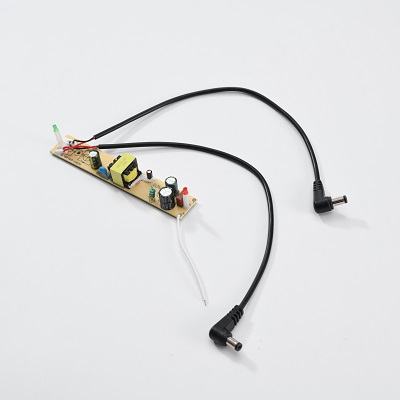
What Is a Dual Power Supply?
A dual power supply is a power system that uses two independent power supply sources or modules to provide power to one electronic system.
The basic configuration can be represented as:
Power Supply A + Power Supply B → Power Management Circuit → Load
The exact operating principle depends on the design.
In a basic backup configuration, one power supply operates as the primary source while the second remains available as a backup.
In a redundant configuration:
Power Supply A → Load
Power Supply B → Standby
If Power Supply A fails:
Power Supply A → Fault
Power Supply B → Load
The system can automatically switch or isolate the failed power supply so that the equipment continues operating.
This is why dual power supplies are widely used when uninterrupted operation and system reliability are important.
How Do Dual Power Supplies Work?
Primary and Backup Power Supply Operation
One of the most common ways a dual power supply system works is through primary and backup operation.
Under normal conditions, Power Supply A provides the required power to the load. Power Supply B remains available as a backup.
A monitoring and power management circuit continuously monitors parameters such as:
Output voltage
Output current
Power supply status
Fault conditions
Input power availability
If the primary power supply becomes unavailable, the system detects the fault and transfers the load to the secondary power supply.
The simplified process is:
Normal operation:
Power Supply A → Load
Power Supply B → Standby
Primary failure:
Power Supply A → Fault
Power Supply B → Load
This arrangement is commonly called a redundant power supply system.
Automatic Power Switching
A dual power supply system may use an automatic switching circuit to select between two power sources.
The switching circuit detects whether the primary power source is operating correctly. If a fault occurs, it disconnects the failed source and connects the backup source.
Depending on the system design, switching may use:
Relays
Diodes
MOSFETs
Ideal diode controllers
Power management ICs
Redundancy controllers
For high-reliability applications, semiconductor-based switching can provide faster and more controlled power transfer than traditional mechanical relays.
Power Supply ORing
Power supply ORing is another common method used in redundant power supply systems.
Two power supplies are connected to a common load through isolation components:
Power Supply A → ORing Circuit → Load
Power Supply B → ORing Circuit → Load
The ORing circuit prevents one power supply from feeding current backward into the other.
Traditional systems may use diodes for ORing, while modern high-efficiency systems can use MOSFET-based ideal diode circuits to reduce voltage drop and power loss.
Load Sharing Between Two Power Supplies
Not every dual power supply system uses a primary-and-backup configuration.
Some systems allow both power supplies to operate simultaneously.
For example:
Power Supply A + Power Supply B → Load
The two units share the load according to the system's control strategy.
This is known as load sharing or power sharing.
Load sharing can provide several benefits:
Higher available power
Lower load on each power supply
Improved thermal performance
Better system scalability
Increased power supply lifetime
However, two ordinary power supplies should not simply be connected in parallel without appropriate circuit design. Their output voltages, current-sharing characteristics, control loops, and protection mechanisms must be compatible.
What Happens When One Power Supply Fails?
The main advantage of a dual power supply is the ability to maintain system operation when one power source fails.
Consider a system with two independent power supplies.
Normal Operation
Both power supplies are available.
PSU A → System
PSU B → Backup / Redundant
The system receives stable power from the designated primary or shared power sources.
Power Supply A Fails
If PSU A experiences an internal fault, input power loss, overheating, or another abnormal condition, the redundancy circuit detects the failure.
The system then isolates PSU A and allows PSU B to supply the load.
PSU A → Failed
PSU B → System
This prevents a single power supply failure from immediately shutting down the entire system.
The actual transfer time and whether the load experiences an interruption depend on the specific dual power supply design.
Dual Power Supply vs Redundant Power Supply
The terms dual power supply and redundant power supply are related but do not always mean exactly the same thing.
A dual power supply simply means that a system has two power supply sources or units.
A redundant power supply specifically refers to a configuration designed to maintain operation if one power source fails.
For example:
Dual Power Supply:
Two power supplies are installed.
Redundant Power Supply:
Two power supplies are installed and the system is designed so that one can continue supplying the load if the other fails.
Therefore, redundancy depends on the electrical architecture and power management design, not simply the number of power supply units.
Common Dual Power Supply Configurations
1+1 Redundant Power Supply
A 1+1 redundant power supply system uses two power supply modules to support a load that normally requires one module.
For example:
Load requirement: 500W
PSU A: 500W
PSU B: 500W
Either PSU can support the required load if the other fails, assuming the system is correctly designed for redundancy.
This is a common architecture for servers, networking equipment, industrial systems, and other critical equipment.
N+1 Redundant Power Supply
An N+1 redundant power supply system uses the minimum number of power supply modules required to support the load plus one additional module for redundancy.
For example, if three power modules are required for normal operation, an N+1 system uses four modules.
This architecture provides greater scalability and fault tolerance for high-power systems.
Dual Input Power Supply
Some systems have two independent input sources rather than two complete power supply modules.
For example:
AC Input A → Power Supply
AC Input B → Backup Power Supply
The system can select or transfer between the two input sources according to availability.
This configuration is useful for equipment connected to independent power sources.
Why Use a Dual Power Supply System?
Improved Reliability
The most important benefit of a dual power supply system is improved reliability.
If a single power supply is the only source of power, its failure can shut down the entire system.
With two independent power supplies, the second source can continue powering the equipment when the first source fails.
Reduced Downtime
Unexpected power supply failures can cause equipment shutdown, production interruptions, data loss, or service disruption.
A redundant power supply can reduce the risk of downtime caused by a single power supply failure.
Higher Power Capacity
When two power supplies support load sharing, the total available power can be increased.
This is useful for equipment with high power consumption or applications that require future scalability.
Easier Maintenance
Some dual power supply systems support hot-swappable power supply modules.
In such systems, a failed power supply can be removed and replaced while the equipment continues operating through the remaining power supply.
This can significantly simplify maintenance for servers, networking equipment, industrial systems, and communication equipment.
Applications of Dual Power Supplies
Servers and Data Centers
Servers often use dual redundant power supplies to reduce the risk of downtime caused by power supply failure.
Two power supply modules can be connected to independent power sources or power distribution units, improving overall system availability.
Telecommunications Equipment
Communication systems often require continuous operation. A dual power supply system can provide backup power for network and telecommunications equipment.
Industrial Automation
Industrial control systems, PLC equipment, monitoring systems, and automation equipment can use redundant power supplies to improve operational reliability.
Networking Equipment
Routers, switches, network appliances, and other networking devices may use dual power supplies to maintain continuous operation.
Security and Monitoring Systems
Surveillance servers, security equipment, access control systems, and monitoring equipment can benefit from power redundancy.
Medical and Critical Equipment
Where continuous power availability is important, appropriately designed redundant power supply systems can provide an additional layer of system reliability.
How to Choose a Dual Power Supply
When selecting or designing a dual power supply system, several electrical and mechanical parameters should be considered.
Input Voltage
Determine whether the system requires:
AC input
DC input
Single-phase AC
Three-phase AC
Multiple independent inputs
The input voltage range should match the available power source.
Output Voltage
Common DC output voltages include:
5V
9V
12V
24V
48V
The output voltage should match the requirements of the connected equipment.
Output Power
Determine the total load power and whether the system requires:
Backup capacity
Load sharing
N+1 redundancy
Additional power headroom
Redundancy Architecture
The appropriate architecture may be:
1+1 redundancy
N+1 redundancy
Dual input
Primary/backup
Load sharing
The correct choice depends on the application's reliability and power requirements.
Protection Functions
A reliable dual power supply should incorporate appropriate protection functions, such as:
Overvoltage protection
Overcurrent protection
Short-circuit protection
Overtemperature protection
Overload protection
Input protection
These functions help protect the power supply and connected equipment.
Custom Dual Power Supply Solutions for B2B Applications
For manufacturers and system integrators, a standard power supply may not always meet the electrical and mechanical requirements of the target equipment.
A custom dual power supply can be designed according to the application.
As a professional dual power supply manufacturer and supplier, we can support B2B customers with customized power supply solutions based on required specifications.
OEM Dual Power Supply
An OEM dual power supply can be designed for integration into a customer's own electronic equipment.
Potential customization options include:
Input voltage
Output voltage
Output power
Current capacity
Redundancy configuration
Connector type
PCB dimensions
Mounting structure
Protection functions
Cooling requirements
Custom Redundant Power Supply
For industrial, communication, server, and automation applications, a custom redundant power supply can be developed according to the required reliability architecture.
The design can incorporate automatic switching, ORing, load sharing, or other redundancy technologies according to the project requirements.
Bulk and Wholesale Supply
We support bulk dual power supply orders and wholesale supply for distributors, importers, equipment manufacturers, system integrators, and other B2B customers.
For OEM and long-term projects, customers can provide electrical specifications and installation requirements so that a suitable solution can be developed.
Why Choose a Professional Dual Power Supply Manufacturer?
Working with an experienced dual power supply manufacturer can help equipment manufacturers obtain a power solution that matches their application requirements.
A professional supplier can provide:
Dual power supply design support
Redundant power supply solutions
OEM and ODM services
Custom electrical specifications
Power redundancy solutions
Load-sharing solutions
Multiple protection functions
Application-specific designs
Bulk and wholesale supply
B2B technical support
Whether you need a dual power supply module, redundant power supply, dual ac power supply, or a customized power redundancy solution, the correct design should be selected according to the load, input source, output requirements, and required level of reliability.
Frequently Asked Questions
How do dual power supplies work?
Dual power supplies work by providing two power sources to the same system. They can operate as primary and backup sources, work simultaneously for load sharing, or provide independent power to different circuits. A control or redundancy circuit manages the power sources and protects them from unwanted interaction.
What is the purpose of a dual power supply?
The main purpose is to improve power reliability and reduce downtime. If one power supply fails, the second supply can continue powering the equipment when the system is designed for redundancy.
Are dual power supplies always redundant?
No. Having two power supplies does not automatically mean the system is redundant. A redundant power supply system requires an appropriate architecture that allows one power source to support the load if another fails.
Can two power supplies be connected in parallel?
Two power supplies should not normally be connected directly in parallel unless they are specifically designed for parallel operation. Proper load-sharing, ORing, or current-balancing circuitry may be required.
What is power supply ORing?
Power supply ORing is a technique that connects multiple power sources to a common load while preventing current from flowing backward from one supply into another. Diodes, MOSFETs, or dedicated ORing controllers can be used.
What is the difference between 1+1 and N+1 redundancy?
In a 1+1 redundant power supply system, two power modules are available and either one can typically support the required load. In an N+1 redundant power supply system, the number of modules includes one additional module beyond the minimum required capacity.
Can dual power supplies share the load?
Yes. Some systems are designed for load sharing, allowing two or more power supplies to operate simultaneously and distribute the load. The power supplies must be compatible with the required current-sharing architecture.
Can you provide custom dual power supplies?
Yes. A professional custom dual power supply manufacturer can develop solutions based on input voltage, output voltage, power, redundancy architecture, dimensions, connectors, protection requirements, and other application specifications.
Who uses dual redundant power supplies?
Dual redundant power supplies are commonly used by server manufacturers, data centers, telecommunications equipment manufacturers, industrial automation companies, networking equipment manufacturers, security system companies, and other B2B equipment manufacturers that require high power reliability.