


An adjustable power supply for OEM production is a fundamentally different specification exercise than picking a bench power supply off a shelf. A lab technician can turn a knob and dial in whatever voltage they need that day; an OEM has to lock in a voltage range, precision, and protection profile at the design stage, then have that exact configuration reproduced reliably across thousands of units. This guide covers what to specify when you're building adjustable output into a product, not just buying one unit for testing.
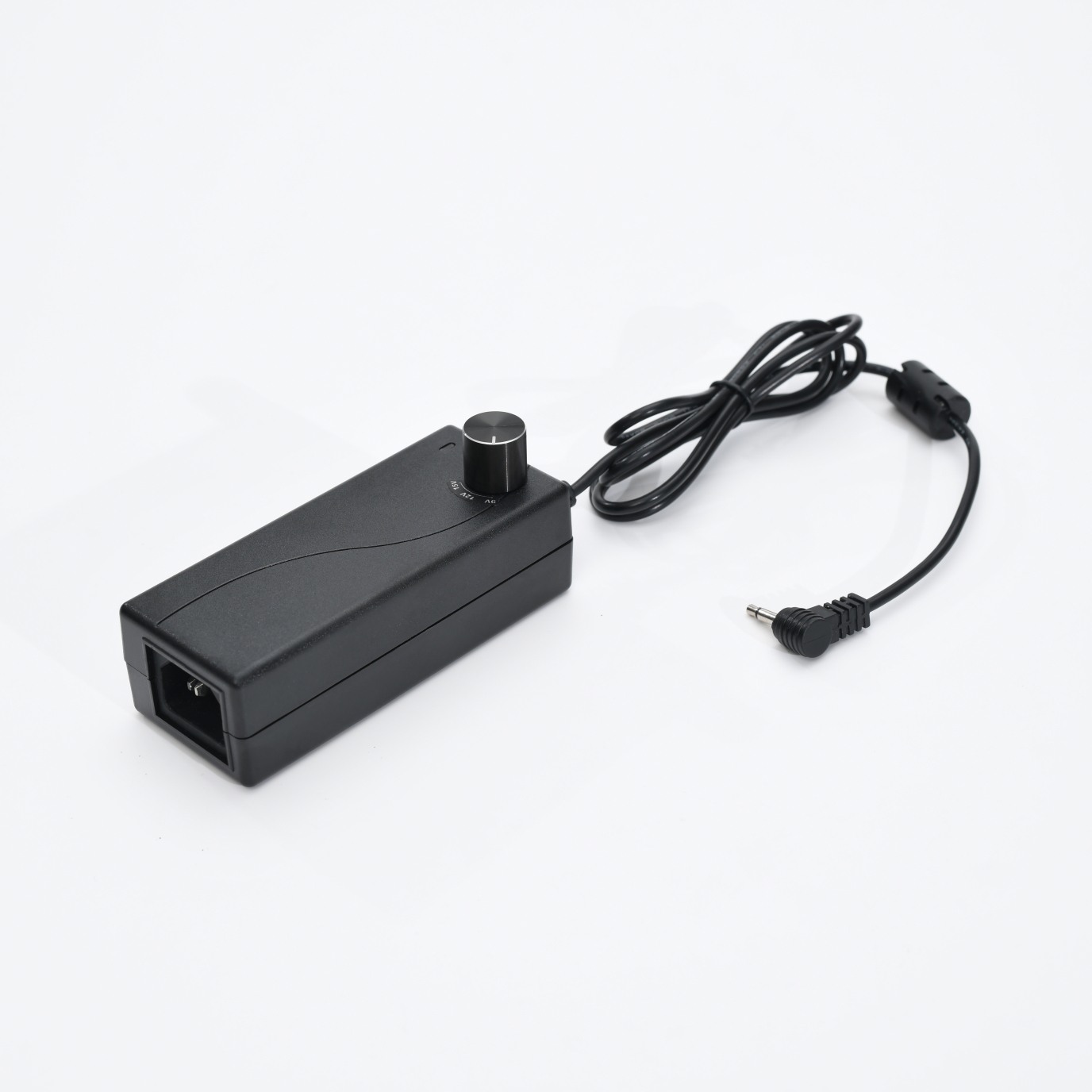
Adjustable vs. Fixed Voltage: Why the Distinction Matters for OEM Design
A fixed-voltage power supply outputs one set voltage, chosen because the end product only ever needs that single value. An adjustable power supply allows the output voltage (and sometimes current) to be set within a defined range, which matters when a product line needs to support multiple device variants, when a customer needs field-configurable output, or when the exact voltage requirement won't be finalized until later in development. The trade-off is complexity and cost: adjustable designs require additional regulation circuitry and testing across the full output range, not just a single point.
What to Specify for a Custom Adjustable Power Supply
1. Voltage and Current Range
Define the full adjustable range your application actually needs — not the widest range theoretically available. A narrower, purpose-built range is typically more efficient and lower-cost than an overly broad general-purpose range, since the circuitry can be optimized for that specific window rather than compromising across a wider span.
2. Adjustment Method
Decide how the output will actually be set in the field: a mechanical potentiometer, a digital interface, or a fixed set of pre-configured voltage options selected during assembly. Each has different cost, reliability, and user-experience implications — a potentiometer is simple and low-cost but can drift over time or be accidentally adjusted, while a locked digital configuration is more consistent but less flexible after manufacturing.
3. Load Regulation Across the Range
Output stability under load can vary depending on where in the adjustable range the supply is set. Confirm load regulation performance is validated across the full range you'll use, not just at a single tested point — a supply that holds tight regulation at 12V may behave differently at 5V or 24V within the same adjustable design.
4. Protection Functions
Adjustable outputs need protection thresholds that scale correctly across the full range, not just at the nominal setting. Over-voltage, over-current, short-circuit, and over-temperature protection should all be confirmed to function properly regardless of where the output is currently set.
Building adjustable output into a new product design? Send us your voltage range, current requirements, and adjustment method, and we'll help you specify a configuration for production.
Common OEM Applications
Product lines with multiple voltage variants: one adjustable base design instead of separate fixed-voltage units per SKU
Field-configurable industrial equipment: installers or integrators set the final voltage on-site to match the specific installation
Products still in development: adjustable output lets engineering teams finalize the exact voltage requirement later without re-tooling a fixed-voltage supply
Multi-region products: designs where regional variants require slightly different output voltages from a shared platform
Adjustable vs. Multi-Output: Which Do You Actually Need?
It's worth distinguishing an adjustable power supply from a multi-output power supply. An adjustable supply provides one output that can be set to different voltages. A multi-output supply provides several fixed (or independently adjustable) outputs simultaneously. If your product needs one voltage that varies by configuration, adjustable is the right category. If it needs several different voltages running at the same time, that's a multi-output design instead.
Not sure whether your design calls for adjustable, multi-output, or a fixed configuration? Tell us how your product uses power, and we'll help you land on the right architecture.
Frequently Asked Questions
1. What is an adjustable power supply?
An adjustable power supply is a Power Converter whose output voltage (and sometimes current) can be set within a defined range, rather than being fixed at a single value. In OEM production, that range and adjustment method are specified and locked in at the design stage.
2. What's the difference between adjustable and fixed voltage power supplies?
A fixed-voltage supply outputs a single set voltage suited to a product that never needs anything else. An adjustable supply allows the output to be set within a range, which adds design complexity and cost but supports multiple product variants or field configuration from one base design.
3. How should I choose the adjustment method for a custom design?
It depends on who needs to adjust the output and how often. A mechanical potentiometer suits simple, occasional adjustment; a digital interface suits precise or remote configuration; pre-set voltage options selected at assembly suit products where the end user never needs to change it themselves.
4. Do protection functions work the same across an adjustable power supply's full range?
They should, but it's worth confirming rather than assuming. Over-voltage, over-current, and other protection thresholds need to be validated at every point across the adjustable range, not just at the nominal or most commonly used setting.