


A multi-output DC power supply delivers three or more independently regulated voltage rails from a single unit, built for systems where different components need different voltages at the same time — for example, a control board that needs 5V for logic, 12V for sensors, and 24V for actuators, all running off one power source. This is a step beyond a dual-output supply, which is limited to two voltage rails. This guide covers when you actually need three-plus outputs, how power sequencing works, and what to check before specifying a multi-output supply for your design.
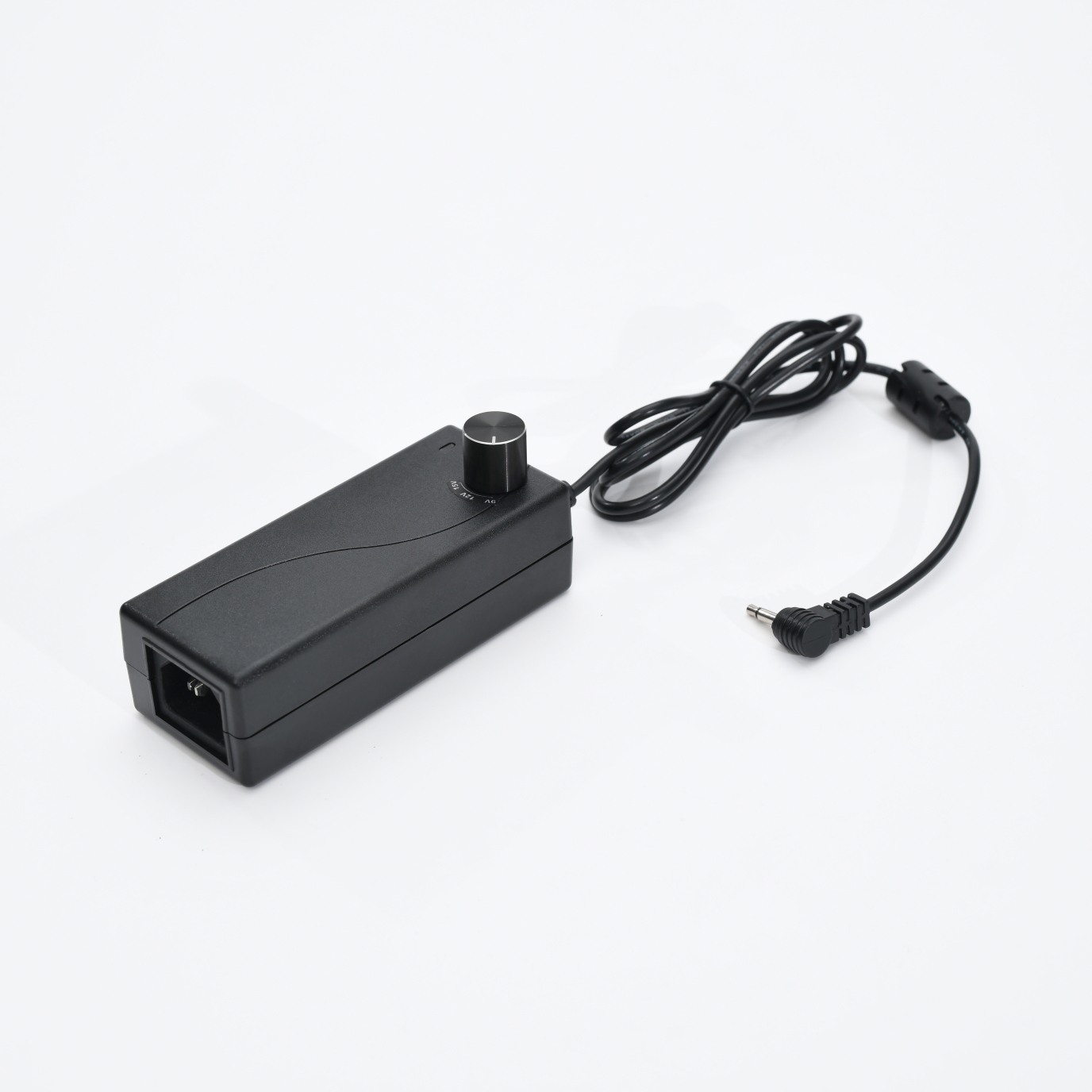
Multi-Output vs. Dual-Output Power Supply: When You Need More Than Two Rails
A dual-output power supply covers a large share of applications where a device needs exactly two voltages — 5V and 12V for embedded electronics, or 12V and 24V for industrial automation, for example. A multi-output supply becomes necessary once a system has three or more subsystems running at different voltages, which is common in more complex equipment: a PCB with digital logic, analog sensors, and higher-voltage actuators or motors, each requiring its own clean, regulated rail rather than sharing a single voltage through inefficient local regulation.
Consolidating three or more rails into one multi-output unit reduces the number of separate power supplies a system needs, simplifying wiring, cutting installation space, and lowering total system cost compared to running multiple single-output supplies side by side.
Key Considerations for Multi-Output Power Supplies
1. Power Sequencing
Many multi-rail systems require outputs to power on and off in a specific order — for example, logic voltage needs to stabilize before a higher-voltage rail energizes a motor or actuator, to avoid startup faults or component stress. Power sequencing capability is one of the most important specifications to confirm before choosing a multi-output supply, since not all units support controlled sequencing across their rails.
2. Independent vs. Shared Ground
Outputs can be designed with a common ground or electrically isolated from one another, depending on the application. Isolated outputs prevent noise or faults on one rail from affecting another, which matters in mixed digital/analog designs or where one output powers sensitive measurement circuitry.
3. Load Balancing and Cross-Regulation
When one output's load changes significantly, it can affect voltage stability on the other rails — a phenomenon called cross-regulation. Multi-output supplies designed for demanding applications minimize this effect, keeping each rail stable regardless of load changes on the others.
4. Total Power Budget Across All Rails
A multi-output supply has a combined maximum power rating shared across all outputs, not a separate full-rated budget for each rail. Confirm the total power budget against your actual combined load across all voltages, including margin for startup surge current, rather than assuming each output can independently draw its maximum rating simultaneously.
Designing a system with three or more voltage rails? Send us your voltage requirements, current draw per rail, and sequencing needs, and we'll help you specify the right configuration.
Common Applications
Industrial control systems: PLCs, sensors, and actuators often require three distinct voltage levels within the same control cabinet
Communication equipment: network devices and base stations with separate digital, RF, and interface circuitry
Test and measurement: lab equipment requiring multiple precise, independently adjustable voltage rails for circuit development and validation
Embedded systems and PCBs: boards combining digital logic, analog sensing, and higher-voltage output stages on a single design
A Note on Terminology
"Dual power supply" is sometimes used to describe two entirely separate power supply units installed for redundancy — where a second unit takes over if the first fails, common in servers and critical infrastructure. That's a different concept from a dual-output or multi-output power supply, which is a single unit delivering multiple voltage rails from one power source. If redundancy rather than multiple voltages is what your system needs, that's a separate design question from the one this guide addresses.
Not sure whether your application needs a multi-output supply, a dual-output supply, or a redundant power configuration? Tell us your system requirements, and we'll help you figure out the right approach.
Frequently Asked Questions
1. What is a multi-output power supply?
A multi-output power supply is a unit that delivers three or more independently regulated DC voltage rails from a single power source, used when a system has multiple subsystems requiring different voltages simultaneously.
2. What's the difference between a multi-output and dual-output power supply?
A dual-output supply provides exactly two voltage rails, while a multi-output supply provides three or more. The right choice depends on how many distinct voltage levels your system's components actually require.
3. Why does power sequencing matter in a multi-output supply?
Some components require certain voltage rails to stabilize before others activate, to avoid startup faults or stress on sensitive circuitry. Power sequencing controls the order in which outputs turn on and off, and not all multi-output supplies support this capability, so it's worth confirming if your application requires it.
4. Can each output on a multi-output power supply run at its full rated power simultaneously?
Not necessarily. Multi-output supplies typically have a combined total power rating shared across all rails, so it's important to confirm the total power budget against your actual combined load rather than assuming each output can independently reach its maximum rating at the same time.