


Wireless charging has become increasingly popular in homes, offices, hotels, vehicles, and public spaces. From smartphones and smartwatches to wireless earbuds, users enjoy the convenience of charging devices without plugging in cables. Products such as the Magnetic Wireless Charger, Three in One Wireless Charger, and Embedded Wireless Charger have made charging more seamless than ever.
However, despite its advantages, wireless charging also has some limitations. Understanding these drawbacks can help consumers and businesses choose the right charging solution for their needs.
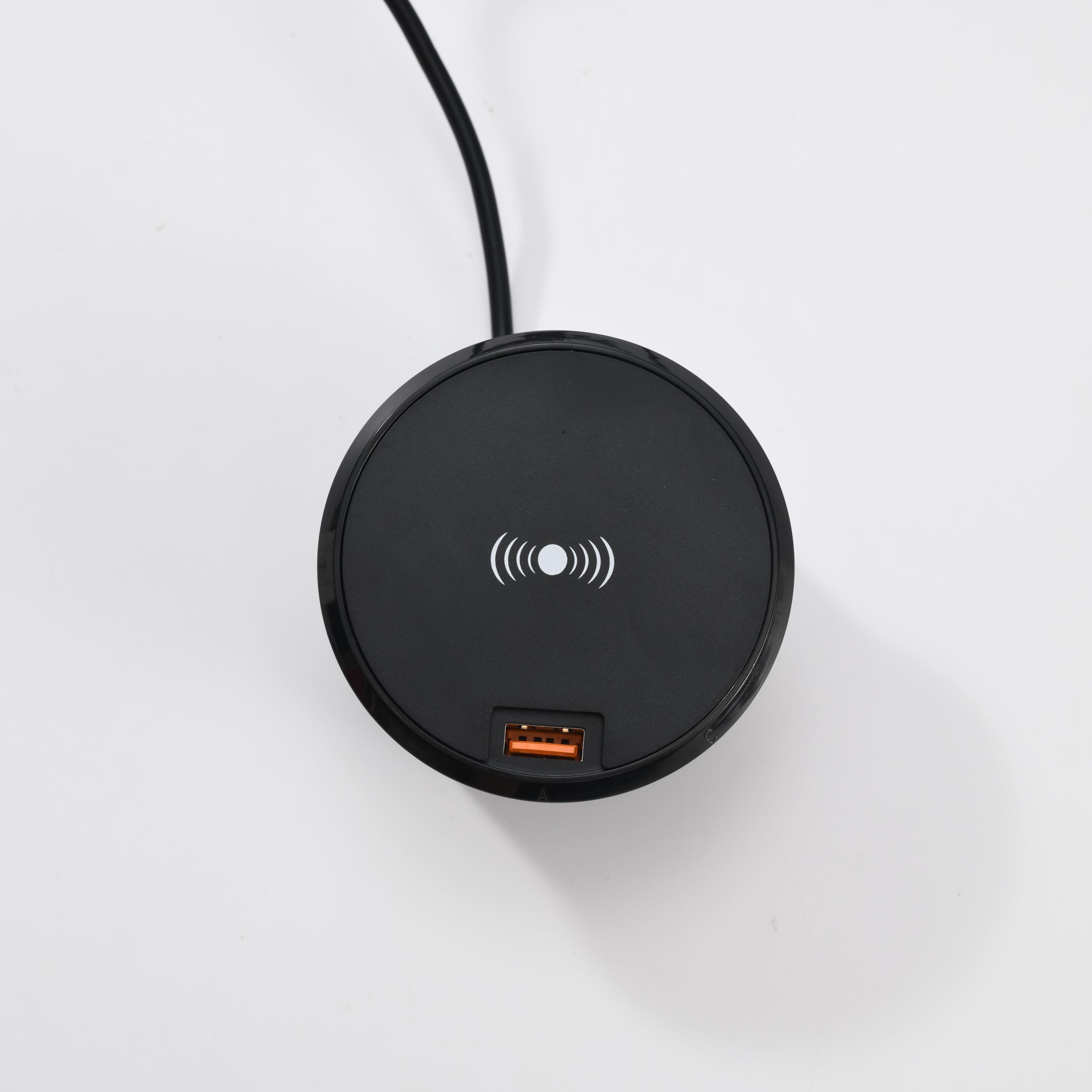
How Does Wireless Charging Work?
Wireless charging uses electromagnetic induction to transfer energy from a charging pad to a compatible device. When the device is placed on the charger, energy is transmitted through magnetic fields rather than physical connectors.
Modern solutions include:
Custom Wireless Charger
Magnetic Wireless Charger
Three in One Wireless Charger
Embedded 3-in-1 Wireless Charger
Embedded Magnetic Wireless Charger
Embedded Isolated Wireless Charger
These products are commonly used in residential, commercial, and industrial environments.
Downside #1: Slower Charging Speed
One of the most common disadvantages of wireless charging is that it can be slower than wired charging.
Although modern fast wireless charging technologies have improved significantly, many wired solutions still deliver higher charging efficiency.
For example, a Fast Charger USB Outlet can often charge a device more quickly than a standard wireless charger because power is transferred directly through a cable.
This difference becomes more noticeable when charging larger devices or when users need a rapid power boost.
Downside #2: Lower Energy Efficiency
Wireless charging systems typically lose more energy during power transfer compared to wired charging methods.
Some energy is dissipated as heat during the charging process, resulting in:
Reduced efficiency
Higher power consumption
Longer charging times
Businesses installing multiple Embedded Wireless Charger systems in commercial environments should consider energy efficiency when selecting charging solutions.
Downside #3: Heat Generation
Wireless chargers often generate more heat than traditional wired chargers.
Excessive heat may:
Reduce charging efficiency
Affect battery longevity
Cause charging interruptions
Impact device performance
Premium products such as Embedded Isolated Wireless Charger systems are designed to improve thermal management and enhance charging stability.
Downside #4: Precise Positioning Required
Unlike wired charging, wireless charging requires the device to be properly aligned with the charging coil.
If positioning is incorrect:
Charging may slow down
Charging may stop completely
Energy efficiency may decrease
This challenge has led to the development of the Magnetic Wireless Charger, which uses magnets to automatically align devices for more reliable charging.
Similarly, an Embedded Magnetic Wireless Charger provides convenient positioning while maintaining a clean, integrated appearance.
Downside #5: Limited Charging Distance
Most wireless chargers require direct contact or very close proximity between the charger and the device.
Unlike future long-range wireless power technologies, current systems generally require users to place devices directly on the charging surface.
This limitation applies to:
Desktop chargers
Charging pads
Embedded Wireless Charger installations
Embedded 3-in-1 Wireless Charger systems
Downside #6: Device Compatibility
Not all devices support wireless charging.
Before purchasing a charger, users should verify compatibility with:
Smartphones
Earbuds
Smartwatches
Accessories
Many manufacturers now offer Custom Wireless Charger solutions that support specific device ecosystems and branding requirements.
Why Wireless Charging Remains Popular
Despite these disadvantages, wireless charging continues to gain popularity because of its convenience and user-friendly design.
Cleaner Workspaces
Wireless chargers reduce cable clutter and create a more organized environment.
This is especially beneficial for:
Offices
Hotels
Restaurants
Conference rooms
Convenient Multi-Device Charging
A Three in One Wireless Charger can charge multiple devices simultaneously, such as:
Smartphone
Smartwatch
Wireless earbuds
This reduces the need for multiple charging cables and adapters.
Seamless Furniture Integration
An Embedded Wireless Charger can be installed directly into:
Office desks
Meeting tables
Nightstands
Hotel furniture
This creates a modern and professional charging experience.
Enhanced User Experience
An Embedded 3-in-1 Wireless Charger combines convenience and functionality, making it ideal for both residential and commercial applications.
Choosing the Right Wireless Charging Solution
When selecting a wireless charger, consider the following factors:
Charging Speed
Look for models that support fast charging standards and pair them with appropriate power sources.
Device Compatibility
Ensure the charger supports the devices you intend to charge.
Installation Requirements
For furniture integration projects, consider:
Embedded Wireless Charger
Embedded Magnetic Wireless Charger
Embedded Isolated Wireless Charger
Multi-Device Support
Users with multiple devices may benefit from a Three in One Wireless Charger or Embedded 3-in-1 Wireless Charger.
Backup Wired Charging
Many environments combine wireless charging with a Fast Charger USB Outlet to provide maximum flexibility and faster charging options when needed.
Applications of Embedded Wireless Chargers
Modern embedded charging solutions are widely used in:
Offices
Integrated charging directly within desks and conference tables.
Hotels
Convenient guest charging without visible cables.
Restaurants and Cafés
Improved customer experience with built-in charging stations.
Smart Homes
Seamless charging integrated into furniture and countertops.
Commercial Spaces
Professional installations using Embedded Wireless Charger technology to enhance convenience and aesthetics.
So, What Is the Downside of Wireless Charging? The primary disadvantages include slower charging speeds, lower energy efficiency, heat generation, alignment requirements, limited charging distance, and compatibility concerns.
However, innovations such as the Magnetic Wireless Charger, Embedded Magnetic Wireless Charger, Embedded Isolated Wireless Charger, and Three in One Wireless Charger continue to improve the user experience. For businesses and consumers seeking a modern, cable-free charging solution, products like the Custom Wireless Charger and Embedded 3-in-1 Wireless Charger offer an attractive balance of convenience, functionality, and design.